

Waterproof vs. Water-Resistant Tablets: A Rugged Device Guide

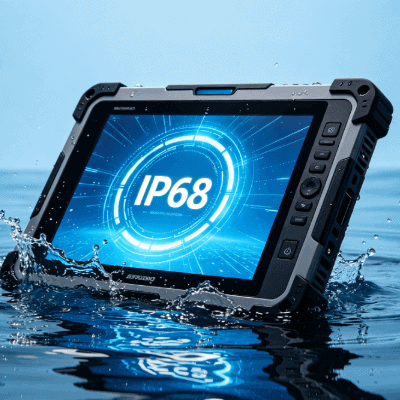
The distinction between “waterproof” and “water-resistant” is often treated as semantic in consumer electronics, but in industrial, field service, and manufacturing environments, this nuance represents the difference between operational continuity and a catastrophic hardware failure. For a project manager or systems engineer, specifying the wrong level of ingress protection can lead to high TCO (Total Cost of Ownership) through frequent device replacements and worker downtime.
To make an informed procurement or engineering decision, one must look beyond marketing terminology and focus on standardized testing protocols, specifically Ingress Protection (IP) ratings and Military Standard (MIL-STD) certifications.
Understanding the Technical Thresholds
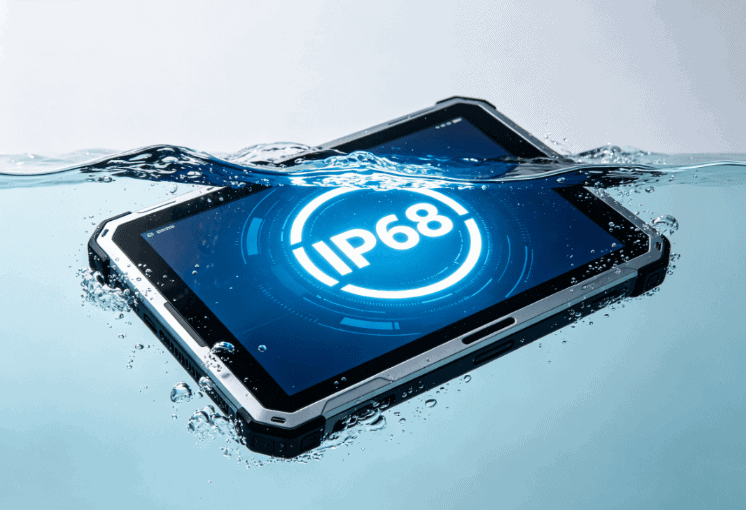
The core difference between water-resistant and waterproof tablets lies in their ability to withstand pressure and duration of exposure.
Water-Resistant Tablets are designed to repel water to a limited degree. Typically, this means the device can handle light rain, humidity, or accidental splashes. In technical terms, these devices usually carry lower IP ratings (such as IP54 or IP65). They utilize gaskets and tight-fitting components to prevent moisture entry under low-pressure conditions.
Waterproof Rugged Tablets are engineered for full submersion or high-pressure jets. These devices are hermetically sealed and often feature specialized port covers and chemically bonded glass. A truly waterproof tablet (typically IP67 or IP68) can survive being dropped into a tank of water or used in heavy downpours without internal damage.
The Ingress Protection (IP) Rating System Explained
In the world of waterproof rugged tablets, the IP rating is the only objective metric that matters. Governed by the IEC 60529 standard, the IP code consists of two digits.
- The First Digit (Solid Ingress): Ranges from 0 to 6, indicating protection against dust and particulates. Most industrial tablets are rated 6 (dust-tight).
- The Second Digit (Liquid Ingress): Ranges from 0 to 9K, indicating the level of moisture protection.
Common Industrial Ratings:
- IP65: Dust-tight and protected against water jets from any angle. This is the standard for most “water-resistant” rugged tablets used in rain or dusty warehouses.
- IP67: Dust-tight and protected against the effects of immersion in water up to 1 meter for 30 minutes. This is the baseline for a “waterproof” device.
- IP68: Dust-tight and protected against long-term immersion under pressure. This is essential for maritime or extreme outdoor applications.
- IP69K: The highest level of protection, designed for high-pressure, high-temperature washdowns (common in food processing and medical manufacturing).
Comparison: Water-Resistant vs. Waterproof Rugged Tablets
| Feature | Water-Resistant (e.g., IP65) | Waterproof (e.g., IP67/IP68) |
|---|---|---|
| Typical Environment | Warehousing, light rain, damp factories | Offshore, heavy rain, firefighting, mining |
| Moisture Exposure | Light splashes, high humidity | Submersion, torrential rain, washdowns |
| Sealing Technology | Mechanical gaskets & rubber plugs | Hermetic seals & reinforced port doors |
| Operational Risk | High if submerged | Low in almost all wet conditions |
| Cost Implications | Standard industrial pricing | Premium due to specialized engineering |
Beyond Ingress: The Role of MIL-STD-810H
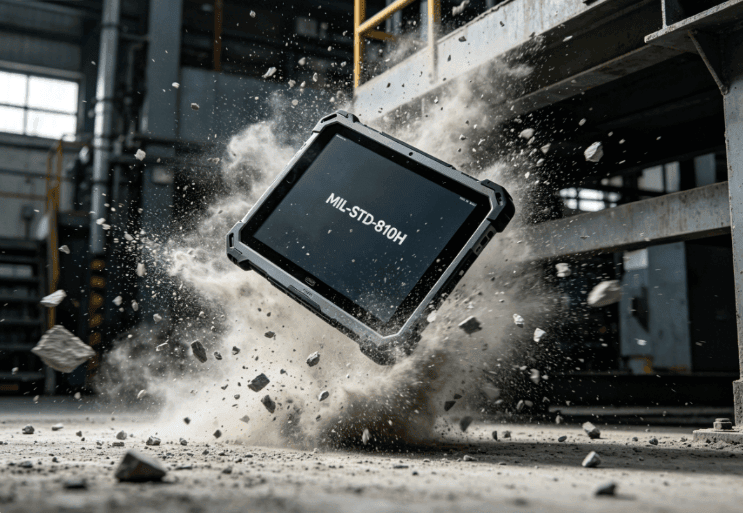
Waterproofing is rarely a standalone requirement. In most industrial scenarios, a waterproof rugged tablet must also survive drops, vibrations, and thermal shock. This is where the United States Military Standard (MIL-STD-810H) comes into play.
While the IP rating covers liquids and solids, MIL-STD-810H tests the device against environmental stress. For example, a tablet might be waterproof, but if the seals fail under extreme heat or if the chassis cracks after a 4-foot drop, the waterproofing is compromised. When evaluating hardware—such as the professional-grade solutions found in the Industrial Tablet PC rugged series—engineers look for the synergy between IP67 sealing and MIL-STD-810H structural integrity.
Real-World Engineering Considerations
When selecting a tablet for a specific application, consider these three “hidden” technical factors:
1. Wet-Touch and Glove-Touch Technology
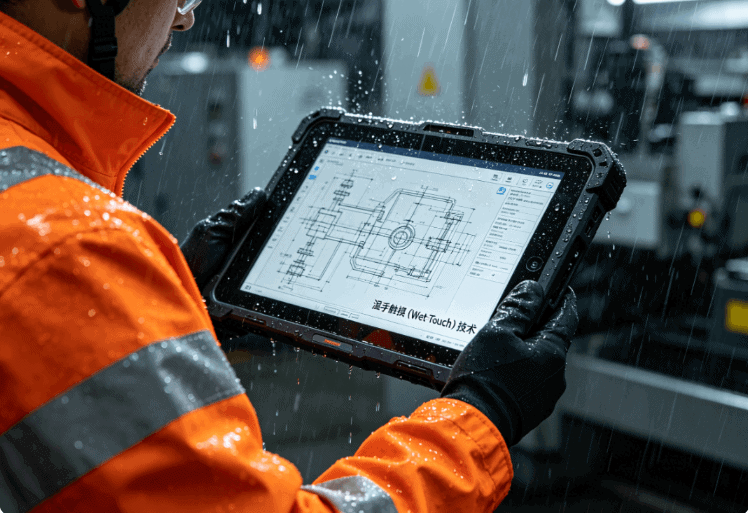
Standard capacitive touchscreens fail when water is present on the glass; the water acts as a conductor, causing “ghost touches.” High-end waterproof tablets utilize specialized firmware and controllers that can distinguish between a water droplet and a finger or stylus. If your workforce operates in the rain, a waterproof rating is useless without “Wet-Touch” capability.
2. Port Sealing and I/O Design
A common failure point in waterproof tablets is the I/O door. Many industrial tablets use rubber bungs. While these work for water resistance, true waterproof tablets often utilize locking mechanical latches or pogo-pin docking connectors. Pogo-pin connectors are preferred for heavy-duty applications because they allow for charging without ever opening a protective seal, maintaining the integrity of the device’s internal vacuum.
3. Corrosion Resistance (Salt Fog)
If the tablet is being used in maritime environments or near the coast, “waterproof” isn’t enough. Saltwater is highly corrosive. You must ensure the device is tested for salt fog resistance (MIL-STD-810H Method 509.7). This ensures that the metal components, such as external screws and charging pins, won’t degrade after exposure to salt air.
Selecting the Right Device for Your Industry
Selecting the correct level of protection is a balance between environmental reality and budget.
- Warehousing & Logistics: Typically, an IP65 water-resistant tablet is sufficient. These environments are generally covered, but devices may face dust and occasional exposure to rain at loading docks.
- Field Service & Utilities: An IP67 waterproof tablet is recommended. Field technicians often work in unpredictable weather where a device might be dropped into a puddle or used in a heavy storm.
- Manufacturing & Chemical Processing: If the environment requires frequent cleaning or involves chemical splashes, an IP68 or IP69K device is necessary to withstand pressurized cleaning cycles.
Conclusion
The decision between a waterproof and a water-resistant tablet should be driven by the “worst-case scenario” of your operating environment. While a water-resistant IP65 tablet offers significant protection over consumer devices, it cannot survive submersion. For mission-critical tasks where the device is exposed to the elements, an IP67 or IP68 waterproof rugged tablet is a necessary investment to ensure long-term reliability and data integrity.
FAQ
Q1: Can I use a water-resistant tablet in heavy rain?
Most IP65-rated tablets can handle light rain for short periods. However, for prolonged use in heavy downpours, an IP67-rated waterproof tablet is recommended to prevent moisture from bypassing seals under the pressure of the rain.
Q2: Does “waterproof” mean the tablet is indestructible?
No. Waterproofing only refers to liquid ingress. A tablet can be waterproof but still break if dropped or subjected to heavy vibration. Always check for MIL-STD-810H certification alongside the IP rating.
Q3: Do I need to do anything to maintain the waterproof seal?
Yes. For rugged tablets with port covers, the user must ensure the covers are fully seated and free of debris. Over time, rubber gaskets can degrade; many manufacturers recommend periodic inspections or seal replacements for devices used in extreme conditions.
Q4: Is a higher IP rating always better?
Technically, yes, but practically, it depends on cost. An IP68 tablet is more expensive than an IP65 one. If your device will never be submerged, the extra cost of IP68 might not provide a meaningful ROI for your specific project.
Reference Sources
SGS Group: Technical reports on ingress protection and material durability in industrial electronics.
IEC 60529: Degrees of protection provided by enclosures (IP Code). International Electrotechnical Commission.
MIL-STD-810H: Department of Defense Test Method Standard for Environmental Engineering Considerations and Laboratory Tests.
ASTM D4169: Standard Practice for Performance Testing of Shipping Containers and Systems (often used in conjunction with ruggedness testing).