

Rugged Tablet Features: A Technical Guide for Industrial Buyers

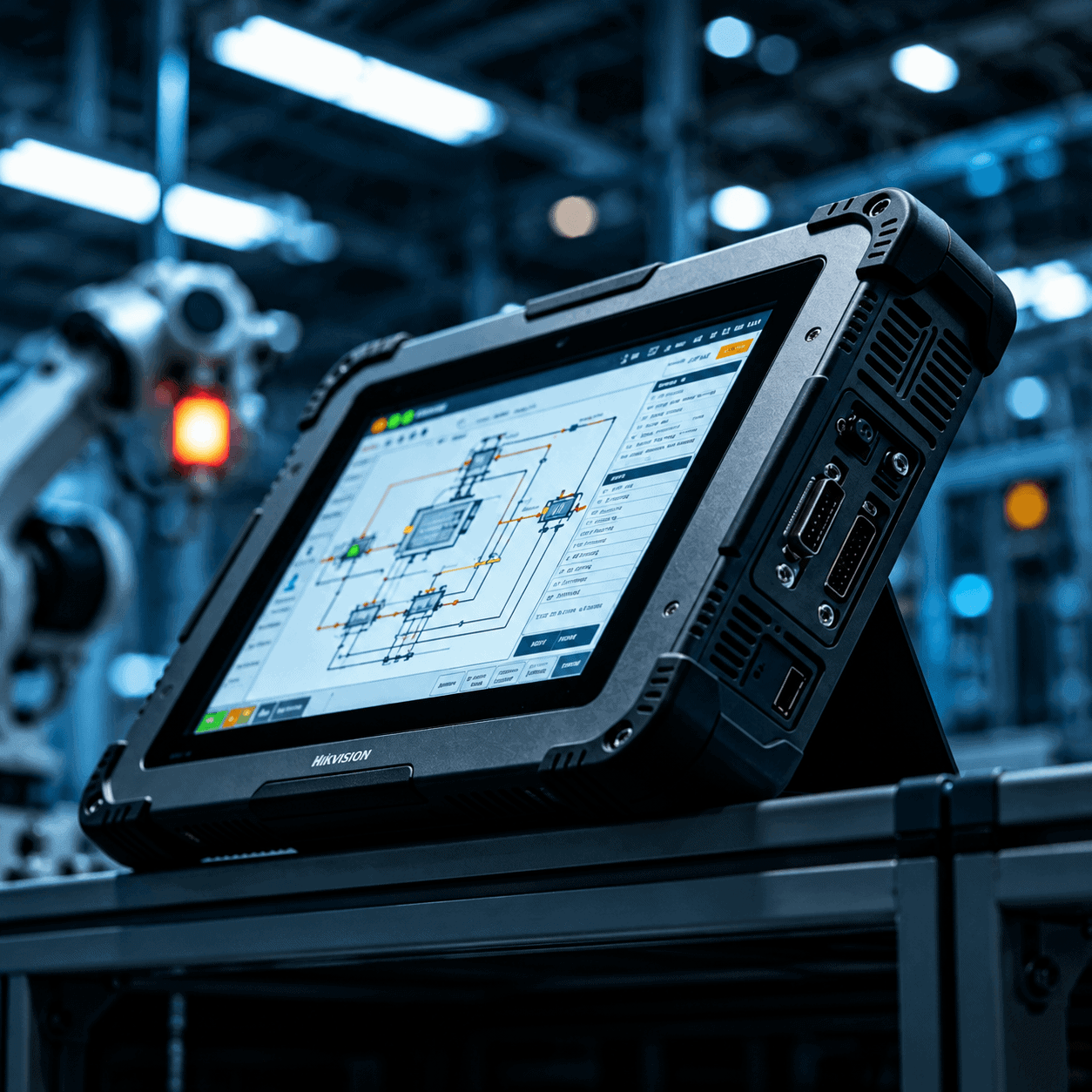
Standard consumer tablets are designed for climate-controlled living rooms and offices. In contrast, industrial environments—ranging from sub-zero cold storage warehouses to high-vibration manufacturing floors—require hardware that survives where others fail. For a procurement manager or systems engineer, “rugged” is more than a marketing term; it is a suite of engineering standards that mitigate the risk of downtime and total cost of ownership (TCO).
Identifying the right rugged tablet features requires looking beyond the processor speed. It demands an understanding of how internal components are secured, how thermal loads are managed without fans, and how display technology overcomes the glare of high-noon sunlight.
Decoding Durability: IP Ratings and MIL-STD Standards
The foundation of any rugged device is its ability to resist environmental ingress and physical shock. When evaluating hardware, two primary certifications define the baseline of protection.
Ingress Protection (IP) Ratings
The IP rating consists of two digits. The first (0–6) represents protection against solids like dust; the second (0–9) represents protection against liquids.
- IP65: Dust-tight and protected against water jets. Ideal for general manufacturing.
- IP67: Dust-tight and capable of surviving immersion in water (up to 1 meter for 30 minutes). Essential for outdoor field service or maritime applications.
MIL-STD-810G/H
Originally developed by the U.S. Department of Defense, this standard involves a battery of tests including drop shocks, vibration, humidity, and thermal shock. A truly rugged tablet should be tested to withstand 4-foot drops onto concrete, ensuring that the internal PCB (Printed Circuit Board) does not crack under impact.
| Feature Category | Consumer Tablet | Industrial Rugged Tablet |
| Drop Protection | Plastic/Glass (Fragile) | Reinforced Chassis / Magnesium Alloy |
| Sealing | Minimal / None | IP65 to IP68 Certified |
| Temperature | 0°C to 35°C | -20°C to 60°C (Extended Range) |
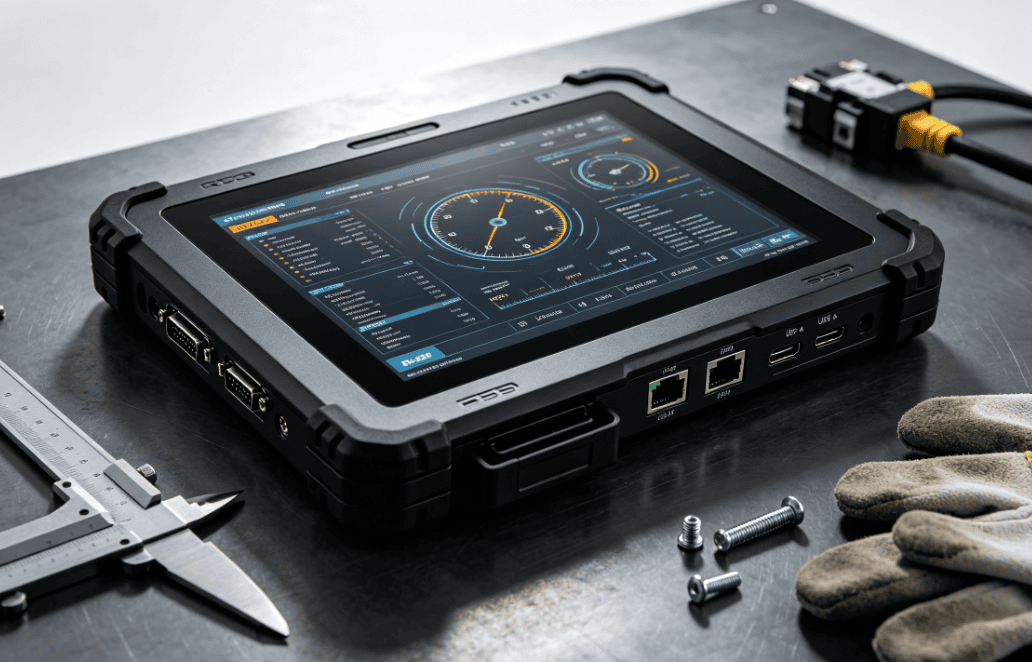
| I/O Ports | USB-C only | Serial (RS232), RJ45, USB-A, Pogo Pins |
Sunlight Readability and Advanced Display Technology
In outdoor environments, standard screens become mirrors. Industrial tablets utilize specific features to ensure data remains visible under direct sunlight (high-ambient lighting).
- Nits (Luminance): While a standard laptop might offer 250–300 nits, an industrial-grade tablet often ranges from 800 to 1,000+ nits.
- Optical Bonding: This process involves applying a layer of resin between the LCD and the touch glass. It eliminates the air gap, significantly reducing internal reflections and improving contrast.
- Electromagnetic Resonance (EMR) & Glove Touch: Industrial workflows often require PPE. High-quality rugged tablets feature “Glove Mode” or “Rain Mode” sensitivity settings, allowing workers to operate the interface with wet hands or heavy work gloves without ghost-touches.
Industrial Connectivity and I/O Versatility
Modern field operations rely on real-time data synchronization. However, the hardware must also bridge the gap between legacy machinery and modern cloud systems.
- Dedicated GNSS: Unlike the consumer-grade GPS found in smartphones, industrial tablets often integrate dedicated U-Blox or similar GNSS modules for sub-meter positioning accuracy, critical for mapping and asset tracking.
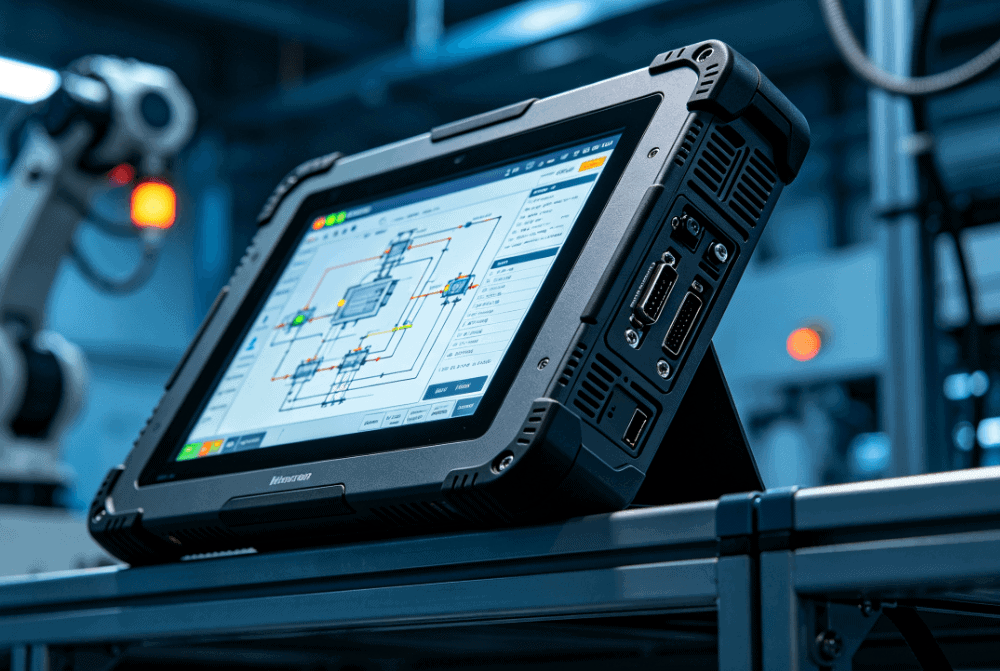
- Legacy Port Integration: Many industrial tablets, such as those found in the Industrial Tablet PC rugged category, offer modular I/O. This allows for the inclusion of RS-232 Serial ports, RJ45 Ethernet, and specialized DB9 connectors used to interface directly with PLC (Programmable Logic Controller) systems on the factory floor.
- Expansion Slots: Features like integrated 1D/2D barcode scanners, RFID/NFC readers, and smart card readers (CAC) eliminate the need for cumbersome external dongles, reducing the risk of port damage.
Thermal Management and Power Continuity
In a manufacturing or oil & gas setting, hardware failure due to overheating or battery depletion can halt an entire production line.
Fanless Cooling
To maintain IP65 or IP67 ratings, tablets must be sealed. This prevents the use of traditional fans which suck in dust and moisture. Industrial tablets utilize passive cooling via heat sinks and magnesium alloy housings that dissipate heat through the chassis. This ensures the CPU doesn’t throttle performance even in 50°C environments.
Hot-Swappable Batteries
Standard tablets require the device to be powered down and plugged in for charging. Industrial buyers should look for hot-swappable battery systems. A small internal “bridge battery” keeps the OS running for several minutes, allowing the user to swap a depleted battery for a fresh one without losing data or restarting the device. This enables 24/7 continuous operation.
Why Purpose-Built Tablets Outperform in Lifecycle Management
A common mistake in industrial procurement is focusing on the initial hardware cost. However, consumer devices have a short “shelf-life” of 12–18 months before they are discontinued.
Industrial rugged tablets offer Long-term Availability (LTA). A specific model is typically available for 3 to 5 years, with support and parts available for several years after that. This stability is crucial for IT departments that need to maintain a “Golden Image” for software across a large fleet without worrying about driver incompatibilities caused by frequent hardware revisions.
Furthermore, security features like TPM 2.0 (Trusted Platform Module) and hardware-level encryption ensure that sensitive corporate data remains protected, even if the device is lost in the field.
Practical Application: Matching Features to Industry
- Warehousing/Logistics: Focus on integrated 2D scanners, drop-proof ratings (for forklift vibration), and Wi-Fi 6 roaming capabilities to ensure seamless connection between access points.
- Field Utilities: Prioritize 5G connectivity, high-accuracy GNSS, and sunlight-readable displays for outdoor GIS mapping.
- Manufacturing: Focus on RS-232/Ethernet ports for machine diagnostics and fanless designs to prevent metallic dust from entering the circuitry.
By focusing on these technical pillars—sealing, thermal logic, display physics, and port versatility—buyers can select hardware that not only survives the environment but enhances the efficiency of the frontline workforce.
FAQ
What is the difference between “Fully Rugged” and “Semi-Rugged” tablets?
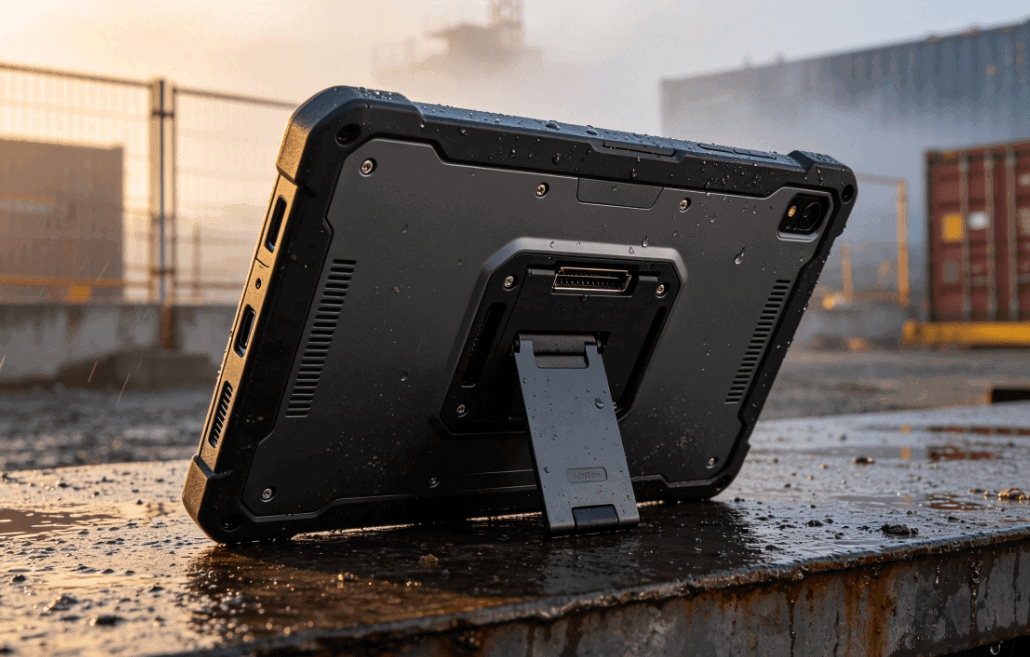
Fully rugged tablets are built from the ground up with a reinforced chassis, high IP ratings (IP65+), and wide temperature tolerances. Semi-rugged tablets are usually standard designs with added protective bumpers and spill-resistant keyboards, suitable for light field work but not for extreme environments or heavy vibration.
Does a higher IP rating mean the tablet is indestructible?
No. An IP rating only measures resistance to dust and water. It does not account for chemical resistance, screen impact, or high-frequency vibration. You must check the MIL-STD-810H test results for mechanical durability.
Can industrial tablets run standard Windows or Android software?
Yes. Most industrial tablets are available with either Windows 10/11 IoT Enterprise or Android Enterprise. These versions offer better control over updates and security compared to consumer versions of the same operating systems.
Why is “Optical Bonding” important for outdoor use?
Optical bonding reduces the number of internal surfaces that can reflect light. This results in a much clearer image in bright sunlight and also prevents internal condensation (fogging) when the tablet moves between extreme temperature changes.
Reference Sources
- IEC 60529: The international standard for Ingress Protection (IP) ratings. Link to IEC
- MIL-STD-810H: Department of Defense Test Method Standard for Environmental Engineering Considerations and Laboratory Tests.
- IEEE Xplore: Research on thermal management in fanless embedded systems and industrial mobile computing. Link to IEEE
- U-Blox Technical Documentation: High-precision GNSS integration for mobile industrial devices.