

English: Industrial Tablet vs Consumer Tablet: Professional Guide

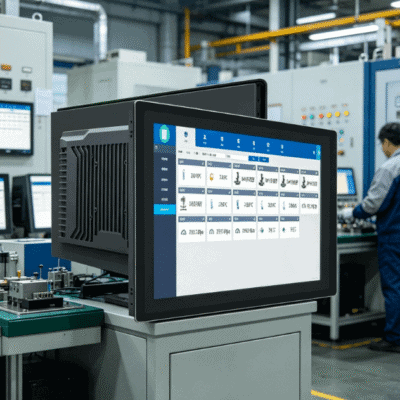
In professional environments, a tablet is more than a screen; it is a critical data node. While consumer tablets like the iPad dominate the retail market, they often falter in industrial settings. For engineers and project managers, understanding the industrial tablet vs consumer tablet debate is essential for maintaining uptime.
This guide analyzes the mechanical, electrical, and commercial differences between these two device categories. We focus on why purpose-built hardware is necessary for manufacturing, logistics, and field operations.
Key Differences: Industrial Tablet vs Consumer Tablet?
The following table highlights the fundamental engineering divergence between hardware designed for the living room and hardware designed for the shop floor.
| Feature | Consumer Tablet | Industrial Tablet |
|---|---|---|
| Housing Material | Plastic or thin aluminum | Magnesium alloy or reinforced polymers |
| Ingress Protection | Often none (or limited IP68) | IP65, IP67, up to IP69K |
| Operating Temp | 0°C to 35°C | -20°C to 60°C (Extended ranges available) |
| Lifecycle Support | 12–18 months | 3–7 years |
| I/O Ports | USB-C (Limited) | RS232, RJ45, GPIO, Specialized Aviation Plugs |
| Drop Rating | Fragile (requires 3rd party cases) | MIL-STD-810G/H (4ft to 6ft drops) |
Engineering for Harsh Environments?
Industrial tablets are designed from the inside out to survive stressors that would instantly destroy a consumer device. They prioritize structural integrity and environmental sealing over slim aesthetics.
Ingress Protection (IP) and Sealing
Most consumer tablets lack certified dust or water protection. In contrast, industrial devices available at Industrial Tablet PC are rated for extreme exposure.
- IP65: Dust-tight and protected against water jets from any angle.
- IP67: Dust-tight and protected against immersion in water up to 1 meter.
Impact and Vibration Resistance
Consumer devices rely on external cases for protection, which often trap heat. Industrial tablets feature internal shock-mounting and magnesium alloy frames to meet military standards.
- MIL-STD-810G/H: Certified to survive repeated drops on concrete.
- Vibration Resistance: Designed for constant movement on forklift mounts or heavy machinery.
Hardware and Connectivity Features?
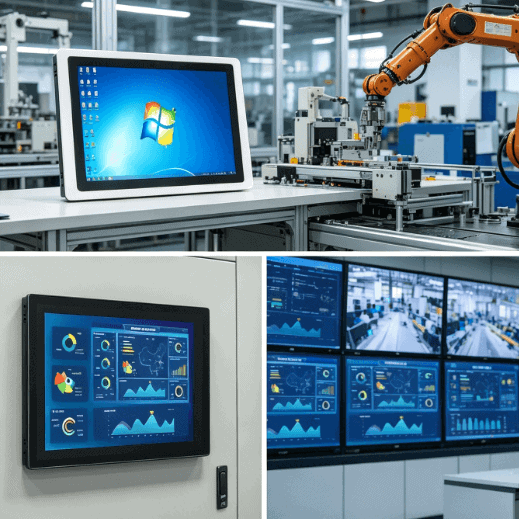
Beyond physical toughness, industrial tablets act as communication hubs for complex machinery. They offer specialized peripherals that are not available on consumer-grade hardware.
Specialized I/O and Peripheral Support
A standard tablet rarely offers more than a charging port. Industrial units provide native connectivity for legacy and specialized equipment.
- Dedicated Barcode Scanners: Integrated 1D/2D CMOS imagers for rapid inventory tracking.
- Native Ports: Physical RS232 (Serial) or RJ45 (Ethernet) ports for PLC interfacing.
- RFID/NFC: Built-in readers for secure access control and asset management.
Display and Touch Interaction
Visibility is a major hurdle in field applications. Industrial screens use advanced optical bonding to ensure readability.
- High Brightness: Screens often exceed 1,000 nits for direct sunlight visibility.
- Glove/Wet Touch: Capacitive controllers calibrated for use with heavy work gloves or in rain.
The Long-Term Business Value?
The initial purchase price of a consumer tablet is lower, but the Total Cost of Ownership (TCO) is often higher due to frequent replacements and downtime.
Lifecycle Stability and IT Management
Consumer models are updated every year, making fleet management difficult. Industrial tablets provide a stable platform for several years.
- 3–5 Year Availability: You can buy the exact same model years later to maintain a consistent fleet.
- Security Control: Access to Windows 10 IoT or “locked-down” Android versions for better cybersecurity.
Power Management
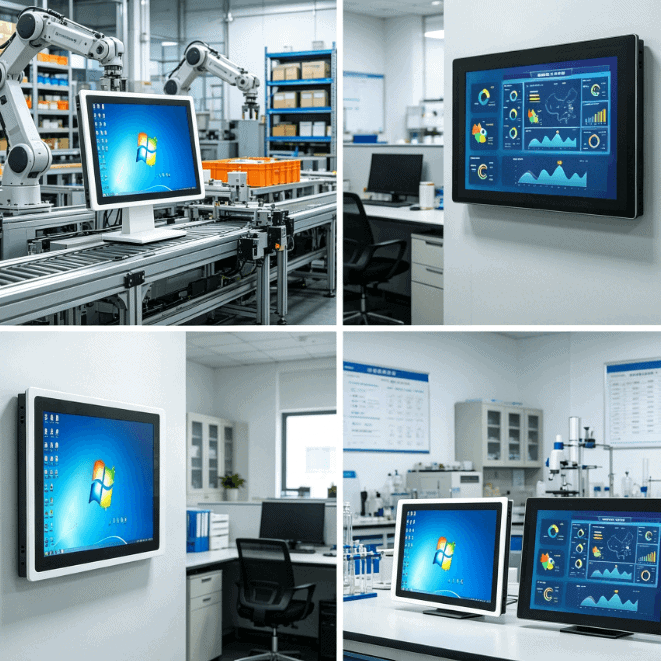
Consumer tablets require downtime for charging. Industrial units utilize energy strategies designed for continuous shifts.
- Hot-Swappable Batteries: Change batteries without powering down the device.
- DC Power Input: Direct wiring options for vehicle or machine integration.
Summary
Choosing between an industrial tablet vs consumer tablet depends on your environment. If your work involves dust, water, vibration, or the need for specialized ports, industrial-grade hardware is the only logical choice. While the upfront investment is higher, the reliability and long lifecycle ensure a significantly better return on investment for any B2B operation.
FAQ
1. Can I use a rugged case to make an iPad industrial?
No, a case does not protect internal components from vibration, heat, or humidity. It also does not add professional I/O ports or extend the short product lifecycle.
2. Why are industrial tablets more expensive?
The cost reflects higher-grade materials, specialized certifications, and long-term support. You are paying for the elimination of downtime in mission-critical applications.
3. Do industrial tablets support 5G and precision GPS?
Yes, most modern industrial units include integrated 5G modules and dedicated GPS sensors. These provide much higher accuracy than the assisted GPS found in consumer phones.
4. What is the typical operating temperature range?
Standard consumer tablets fail outside 0°C to 35°C. Industrial tablets typically operate from -20°C to 60°C, with some specialized models for cold storage or furnaces.
Reference Sources
MIL-STD-810H Environmental Engineering Standard