

Rugged Tablet vs Consumer Tablet: Professional Selection Guide

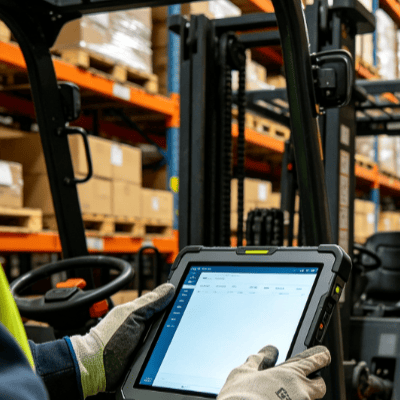
In the modern industrial landscape, the “tablet” has evolved from a media consumption device into a critical piece of operational infrastructure. However, a common procurement pitfall involves treating all hardware as equal. For an IT manager or a factory floor consultant, the choice between a consumer-grade device (like an iPad or Galaxy Tab) and a purpose-built rugged tablet is not just about a “tough case”—it is a decision involving Total Cost of Ownership (TCO), operational uptime, and specialized engineering.
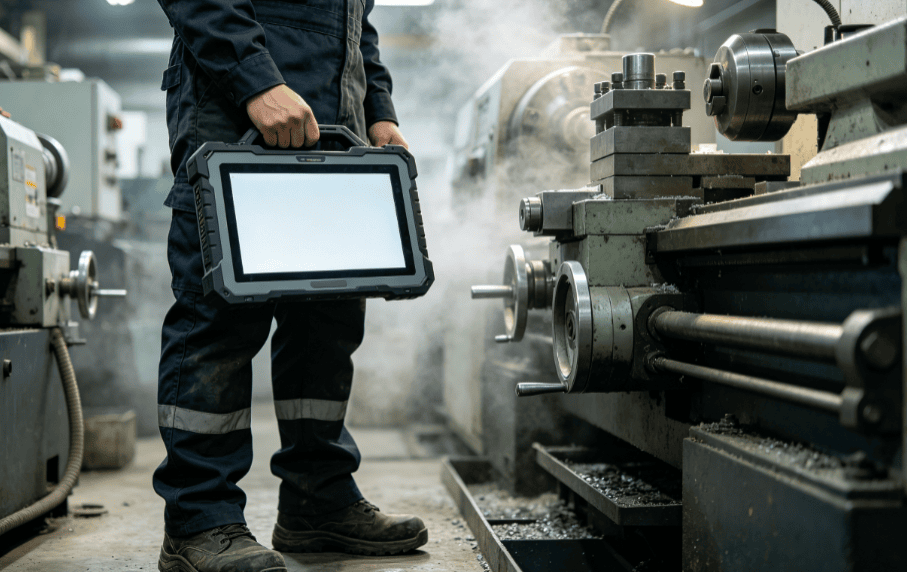
Beyond the Shell: Structural Engineering and Ingress Protection
The most visible difference lies in the mechanical design. A consumer tablet is engineered for aesthetics and portability, often featuring slim glass profiles and heat-dissipating aluminum chassis that are vulnerable to torsional stress.
In contrast, rugged tablets, such as those featured on Industrial-TabletPC, are built from the inside out to meet MIL-STD-810H standards. This military-grade certification involves testing for shock, vibration, and extreme temperature fluctuations. While a consumer tablet might fail after a single 3-foot drop onto concrete, an industrial rugged device is typically rated for 4-to-6-foot drops.
Furthermore, Ingress Protection (IP) ratings define the seal integrity. Most consumer devices offer limited water resistance (IP67 at best), whereas industrial tablets are often rated IP65 or higher, ensuring the internal electronics remain hermetically sealed against fine particulates (sawdust, metal shavings) and high-pressure water jets—essential for “wash-down” environments in food processing or chemical manufacturing.
Display Technology: Sunlight Readability and Glove-Touch Logic
A frequent oversight in hardware selection is the display’s behavior in non-office environments. Standard consumer tablets typically peak at 300 to 500 nits of brightness. Under direct sunlight, these screens become mirrors, rendering them useless for outdoor logistics or site inspections.
Rugged tablets utilize high-nit displays (typically 700 to 1000+ nits) and optical bonding technology to reduce internal reflections. More importantly, the touch controllers are tuned for industrial reality. While a consumer screen erraticizes when wet or touched with a gloved hand, industrial tablets utilize specialized digitizers that support:
- Glove Mode: Capacitive sensing tuned for heavy work gloves.
- Wet-Touch Mode: Algorithms that distinguish between a rain droplet and a finger press.
- Active Stylus Support: For high-precision signatures and CAD viewing in the field.
I/O Connectivity and Modular Customization
Consumer tablets are moving toward a “port-less” future, often relying solely on a single USB-C port. For an OEM project manager or a field engineer, this is a significant bottleneck.
Industrial-grade hardware prioritizes “Legacy and Logic.” It is common to find rugged tablets equipped with:
- Native RS232/RS485 Serial Ports: For direct interfacing with PLC systems and CNC machinery.
- RJ45 Ethernet Ports: For secure, wired network diagnostics in areas with high EMI (Electromagnetic Interference).
- Integrated Data Capture: Built-in 1D/2D barcode scanners, RFID readers, or NFC modules, which are significantly faster and more ergonomic than using a consumer tablet’s camera for scanning.
This modularity allows companies to customize the hardware to the specific workflow, rather than forcing the workflow to adapt to the limitations of the hardware.
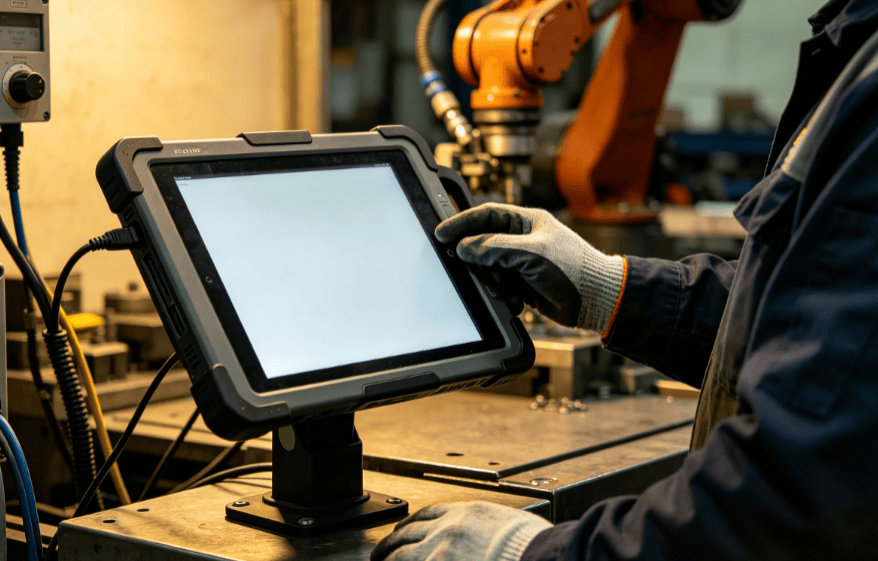
The Lifecycle Gap: Consumer Churn vs. Industrial Stability
From a procurement perspective, the “Lifecycle” is perhaps the most critical differentiator. Consumer electronics operate on a 12-to-18-month refresh cycle. When a specific iPad model is discontinued, accessories like vehicle docks, charging stations, and custom cases become obsolete.
Industrial tablets are designed for long-term availability (typically 3 to 5 years). This stability is vital for enterprise deployments where software images must be validated and peripherals must remain compatible across a fleet. If a unit fails three years into a project, the warehouse manager can order the exact same SKU, ensuring zero friction in deployment and maintenance.
Technical Specification Comparison
| Feature | Consumer Tablet | Rugged Industrial Tablet |
| Durability Standard | None (Requires 3rd party case) | MIL-STD-810G/H (Shock/Vibration) |
| Ingress Protection | IP67 (Usually water only) | IP65 / IP67 (Dust & High-pressure jets) |
| Operating Temp | 0°C to 35°C (Frequent thermal throttling) | -20°C to 60°C (Heater/Fanless options) |
| Display Brightness | 300 – 500 Nits | 700 – 1000+ Nits (Sunlight Readable) |
| Battery Design | Fixed internal | Hot-swappable (24/7 operation) |
| I/O Ports | USB-C / Lightning only | RS232, RJ45, USB-A, DB9, Barcode Scanner |
| Product Lifecycle | 1 Year | 3 – 5 Years |
Total Cost of Ownership (TCO): The Hidden Reality
While the upfront cost of a rugged tablet may be 2x or 3x higher than a consumer device, the TCO over a 5-year period is significantly lower. VDC Research indicates that consumer devices in industrial environments have an annual failure rate of nearly 30%, compared to less than 4% for rugged devices.
When you factor in the costs of:
- Downtime: A worker standing idle because their tablet screen cracked.
- IT Overhead: Frequent re-imaging and troubleshooting of fragile hardware.
- Replacement Costs: Buying three consumer tablets over the lifespan of one rugged device.
The “expensive” rugged option often becomes the most cost-effective choice for the bottom line.
FAQ
Q1: Can’t I just put a rugged case on a consumer tablet?
A case provides “drop protection” but does not address internal vulnerabilities. Consumer tablets lack the internal components to handle constant vibration, thermal expansion, or the heat generated by running high-load industrial apps 24/7. Furthermore, a case does not add industrial I/O ports or sunlight readability.
Q2: Are rugged tablets compatible with standard Windows or Android apps?
Yes. Most industrial tablets run standard Windows 10/11 IoT Enterprise or Android Enterprise. They are designed to run the same ERP, WMS, or CAD software used on desktops, but with hardware optimized for the field.
Q3: What is “Hot-Swappable Battery” capability?
In many manufacturing or logistics shifts, the device must stay powered on for 12+ hours. A hot-swappable battery allows the user to change the battery without shutting down the OS, ensuring continuous uptime and eliminating “charging downtime” during shift changes.
Q4: In which industries is the transition to rugged tablets most critical?
Fields with high “environmental variables” including:
- Oil & Gas: Needs ATEX/IECEx explosion-proof ratings.
- Cold Storage: Needs internal heaters to prevent screen condensation.
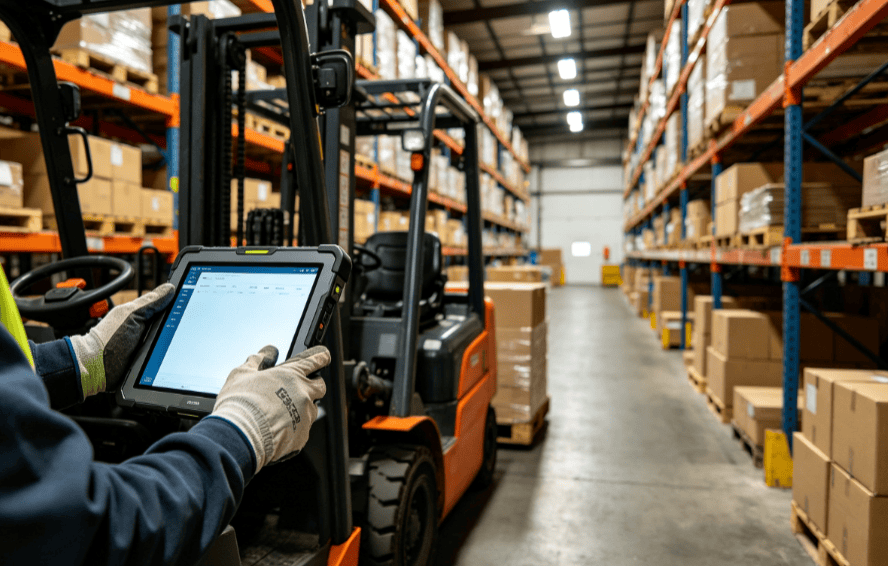
- Logistics: Needs high-vibration resistance for vehicle-mounted use on forklifts.
Reference Sources
- MIL-STD-810H: Department of Defense Test Method Standard for Environmental Engineering Considerations.
- IEC 60529: Degrees of protection provided by enclosures (IP Code).
- VDC Research: Total Cost of Ownership Models for Mobile Computing in Enterprise Environments.
- IEEE Xplore: Analysis of Ingress Protection and Thermal Management in Industrial Embedded Systems.
- Industrial-TabletPC Documentation: Product Design and Specification Architecture.