

Industrial AI Translation Device: A Manufacturing Procurement Guide

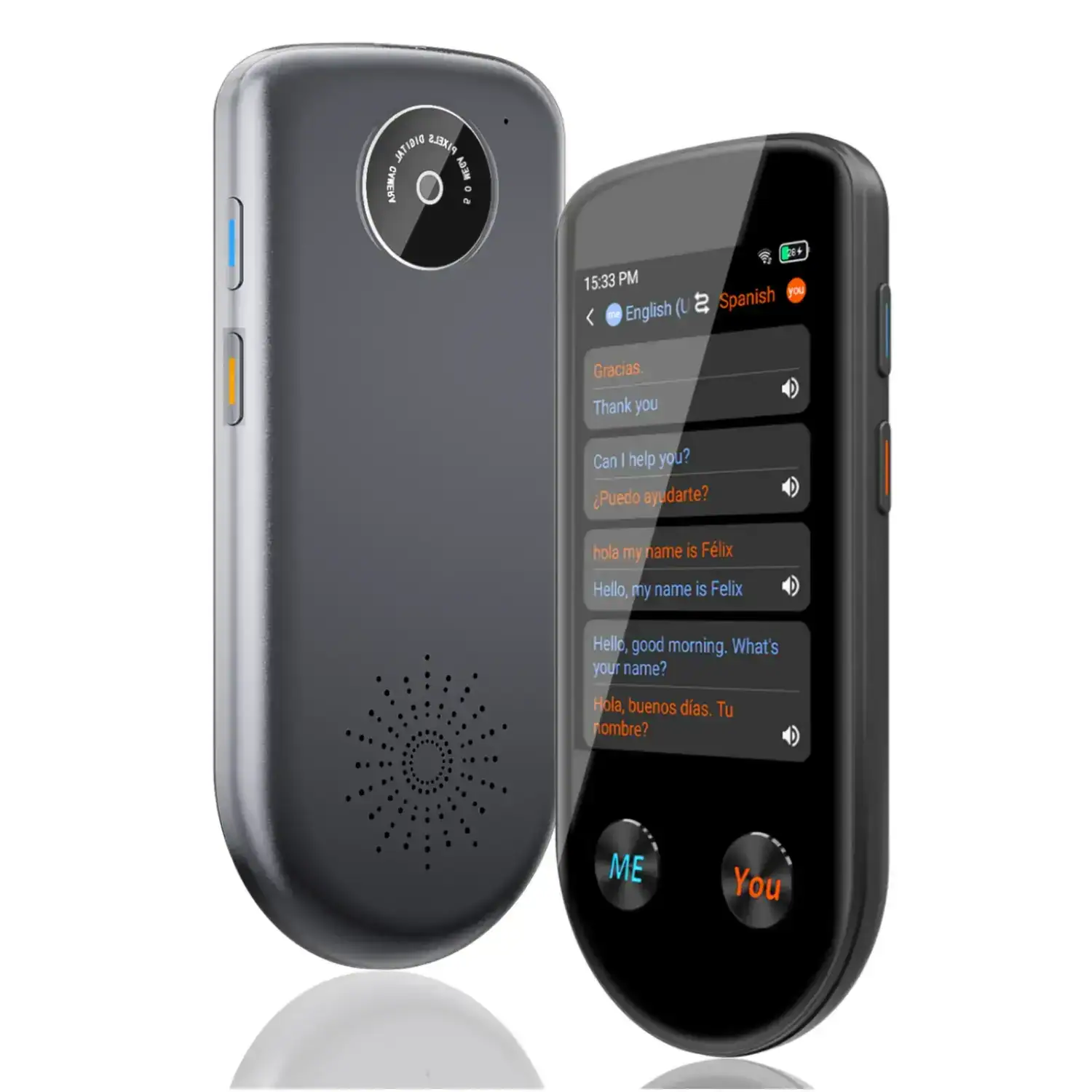
In the high-stakes environment of global manufacturing, a three-second delay in understanding a safety warning or a mistranslated calibration instruction can result in thousands of dollars in downtime—or worse, workplace injuries. While consumer-grade translation apps are sufficient for tourism, they consistently fail in the “loud, dirty, and disconnected” reality of the factory floor.
For procurement managers and OEM project leads, selecting the right industrial AI translation device is a strategic investment in operational efficiency. This guide breaks down the technical requirements, environmental considerations, and hardware specifications necessary for seamless cross-border technical communication.

Why Consumer Translation Solutions Fail on the Factory Floor
Most procurement teams initially attempt to use smartphones or consumer handhelds. However, industrial environments present three specific challenges that render consumer hardware obsolete:
- Acoustic Interference: Factory floors often exceed 85 decibels. Consumer microphones are designed for quiet rooms and struggle to isolate human speech from the rhythmic hum of CNC machines or hydraulic presses.
- Connectivity Dead Zones: Large-scale manufacturing facilities are often “Faraday cages” of steel and concrete. If a device relies solely on a cloud-based API (like Google Translate), it becomes a paperweight the moment a technician enters a shielded cleanroom or a basement utility floor.
- Durability & Haptics: Technicians often wear gloves (latex, nitrile, or heavy-duty Kevlar). Capacitive touchscreens on standard smartphones are unresponsive to gloved hands, and a single drop onto a concrete floor typically ends the device’s lifecycle.
Critical Technical Specifications for Industrial AI Translation
When evaluating an industrial AI translation device, technical documentation should be scrutinized for the following manufacturing-centric features:
1. Multi-Mic Array with DSP Noise Reduction
Look for devices equipped with at least a dual-microphone array (though four is preferred). These units use Digital Signal Processing (DSP) and beamforming technology to “lock onto” the speaker’s voice while active noise-canceling algorithms filter out ambient industrial hum.
2. Offline Neural Machine Translation (NMT)
For IP protection and reliability, the device must support offline translation. High-end industrial units utilize localized NMT engines that allow for near-instantaneous translation of technical terminology (Mechanical, Electrical, and Chemical) without an active Wi-Fi or 4G/5G connection.
3. Ruggedization Standards (IP65 to IP68)
In an electronics or automotive assembly plant, exposure to dust, moisture, and oil is inevitable. An industrial-grade device should carry an IP (Ingress Protection) rating. For most manufacturing applications, IP67 is the sweet spot, ensuring the device is dust-tight and can survive temporary immersion in liquids.
Comparison: Industrial vs. Consumer Translation Hardware
| Feature | Consumer Handheld/App | Industrial AI Translation Device |
| Noise Handling | Peak at 50-60 dB | Effective up to 90+ dB |
| Connectivity | Cloud-dependent | Hybrid (Cloud + Local Offline Engines) |
| Battery Life | 4–6 hours active use | 10–14 hours (Full Shift Capability) |
| Drop Rating | None (Fragile glass) | MIL-STD-810G (1.2m to 2m drop) |
| Specialized Lexicon | General/Travel | Technical/Engineering/Medical |
Hardware Form Factors: Tablets vs. Handhelds
Selecting the right form factor depends heavily on the specific use case within your facility.
- Handheld AI Translators: Best for floor supervisors and QC inspectors who need mobility. These devices are lightweight and usually feature physical “push-to-talk” buttons, which are essential for workers wearing gloves.
- Industrial Translation Tablets: As seen in specialized industrial hardware categories, rugged tablets offer a dual-purpose solution. They provide a larger screen for viewing technical drawings (blueprints) while simultaneously offering split-screen translation for training sessions. These are ideal for OEM equipment installation where foreign engineers must guide local teams through complex wiring or assembly.

The Role of Customization in B2B Procurement
In a B2B context, “one size fits all” rarely applies. When sourcing an industrial AI translation device, look for manufacturers that offer:
- MDM (Mobile Device Management) Compatibility: Can your IT department push security updates or restrict the device to translation-only functions?
- Custom Vocabulary Loading: In niche industries like semiconductor lithography or aerospace, the ability to upload proprietary terminology sets ensures the AI doesn’t misinterpret technical jargon.
- API Integration: For large-scale enterprises, the ability to pipe translated text directly into a Maintenance Management System (CMMS) can automate the documentation of repairs conducted by foreign specialists.
Total Cost of Ownership (TCO) Considerations
A $100 consumer translator may seem cost-effective, but the TCO in a manufacturing environment is often 5x higher than an industrial unit. Factoring in the “Replacement Rate” (due to damage) and “Efficiency Loss” (due to poor accuracy in noisy environments), a purpose-built industrial device generally pays for itself within 6 to 12 months of deployment.
For procurement managers, the goal isn’t just to buy a “translator”; it is to eliminate the linguistic friction that causes lead-time delays. When evaluating suppliers, prioritize those who provide ruggedized chassis, high-capacity batteries (over 4000mAh), and documented accuracy rates for technical sub-sectors.
FAQ: Industrial Translation for Manufacturing
Q: Can these devices handle specific engineering terms?
A: Yes. Unlike consumer apps, industrial-grade AI engines are often trained on technical corpora, including ISO standard terminology and industry-specific glossaries (Automotive, Civil, Electronic).
Q: Is the data shared with the cloud?
A: This is a major concern for proprietary manufacturing processes. Most industrial devices offer a “private mode” or total offline operation, ensuring that your technical conversations never leave the device.
Q: How do these devices handle different accents in a factory setting?
A: Modern industrial AI uses deep learning models that account for regional accents. High-quality hardware with clear audio capture (multi-mic arrays) significantly improves the accuracy of accent recognition compared to standard smartphones.
Q: What is the typical lead time for a bulk OEM order?
A: Depending on customization (logo branding, pre-loaded software), lead times typically range from 4 to 8 weeks. Sampling is usually recommended to test the device’s microphone performance against your specific ambient floor noise.
Reference Sources
- ISO 17100:2015 – Translation Services requirements
- MIL-STD-810G – Department of Defense Test Method Standard for Environmental Engineering
- IEEE Xplore – Research on Noise Cancellation in Industrial Environments
- IP Rating Chart – International Electrotechnical Commission (IEC 60529)