

Choosing a Fanless Industrial Mini PC for OPNsense VPN Gateway

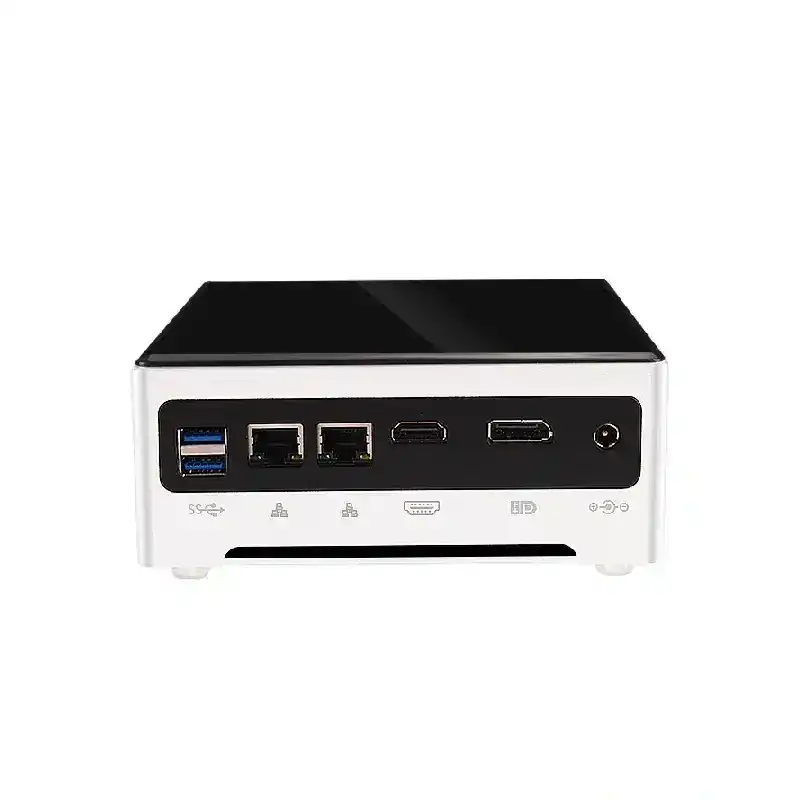
Deploying OPNsense as a primary VPN gateway requires more than just compatible software. In professional and industrial environments, the hardware layer determines the long-term reliability of the network. While consumer-grade routers often fail under heavy encryption loads or high ambient temperatures, industrial-grade hardware is engineered for continuous operation.
A fanless industrial mini PC offers the mechanical and electrical stability necessary for mission-critical networking. This guide examines the technical specifications required to run OPNsense effectively as a VPN gateway, focusing on hardware longevity and throughput performance.

Why Industrial Hardware Matters for OPNsense
OPNsense is a powerful, FreeBSD-based firewall and routing platform. When used as a VPN gateway, it performs resource-intensive tasks like packet inspection and real-time encryption/decryption.
Consumer hardware often relies on active cooling (fans) which are prone to mechanical failure. In an industrial setting—or even a remote server closet—a failed fan leads to thermal throttling. This results in dropped VPN tunnels and network latency.
Industrial mini PCs utilize passive cooling via extruded aluminum heatsink chassis. This design eliminates moving parts, significantly increasing the Mean Time Between Failures (MTBF). For a VPN gateway that must maintain 99.9% uptime, this physical durability is non-negotiable.
Critical Hardware Specifications for VPN Throughput
Selecting the right internal components is essential for maintaining high-speed VPN connections (OpenVPN or WireGuard).
1. CPU and AES-NI Instruction Sets
Encryption is CPU-intensive. When evaluating a fanless industrial mini PC, ensure the processor supports Intel AES-NI (Advanced Encryption Standard New Instructions). This hardware acceleration allows the CPU to process encryption algorithms much faster than software-only methods. Without AES-NI, your VPN throughput will be bottlenecked, regardless of your internet bandwidth.
2. Network Interface Cards (NICs): Intel vs. Realtek
In the OPNsense community, NIC choice is the most frequent point of failure. FreeBSD, the underlying OS of OPNsense, has superior driver support for Intel NICs.
- Intel i225-V or i226-V: These are the current standards for 2.5GbE performance.
- Avoid Realtek: While cheaper, Realtek NICs can experience “watchdog timeouts” or driver instability under high load in a FreeBSD environment.
For a stable VPN gateway, always specify Intel-based Ethernet controllers in your hardware RFQ.
3. Thermal Management and Chassis Design
Industrial mini PCs are rated for specific temperature ranges, often from -20°C to 60°C. Since VPN encryption generates localized heat on the CPU die, the efficiency of the thermal interface material (TIM) and the surface area of the chassis are vital. A high-quality industrial chassis acts as a giant radiator, ensuring the CPU stays within safe operating limits even during 100% load.
Comparison: Industrial Mini PC vs. Consumer Desktop
| Feature | Consumer Mini PC | Industrial Mini PC (VPN Gateway) |
| Cooling | Active Fan (Mechanical) | Passive Fanless (Solid State) |
| Chassis | Plastic or Thin Steel | Heavy-duty Aluminum / Alloy |
| NIC Type | Often Realtek | Primarily Intel i211/i225/i226 |
| Input Voltage | Fixed 12V or 19V | Wide Voltage (9V – 36V DC) |
| Dust Resistance | Low (Internal Accumulation) | High (Fully Sealed) |
| Lifecycle | 12–18 Months | 5–7 Years Availability |
Deployment Scenarios for Industrial VPN Gateways
Remote Site Connectivity
For branch offices or remote construction sites, the “set and forget” nature of fanless hardware is ideal. These environments often lack climate control, making the dust-resistant, wide-temperature capability of an industrial mini PC essential.
Edge Computing and IoT Security
As factories connect more devices to the cloud, an OPNsense gateway serves as a secure “Air Gap” or firewall. Industrial mini PCs can be DIN-rail mounted directly inside electrical cabinets, providing a secure VPN tunnel for PLC data without requiring bulky rack-mount servers.
High-Performance Home Labs
Prosumers and engineers often prefer industrial hardware for its reliability. A fanless unit prevents noise pollution in home offices while providing the robust throughput needed for multiple WireGuard tunnels.
Technical Evaluation for Procurement
When sourcing hardware for an OPNsense project, procurement managers should look beyond the CPU clock speed.
First, verify the Power Input Requirements. Many industrial environments provide 24V DC power. Selecting a mini PC with a wide-voltage power module eliminates the need for external AC adapters, reducing another point of failure.
Second, consider Expansion Slots. Does the project require a 4G/5G failover? If so, the mini PC must have an internal mPCIe or M.2 slot with SIM card access. This allows the OPNsense gateway to maintain the VPN tunnel even if the primary fiber line is cut.
Finally, evaluate Compliance and Certifications. For deployment in regulated industries, ensure the hardware carries CE, FCC, and RoHS certifications. These ensure the device meets electromagnetic interference (EMI) standards, which is critical when the gateway is placed near sensitive industrial sensors.
Maximizing Lifecycle and ROI
The total cost of ownership (TCO) of a fanless industrial mini PC is lower than consumer alternatives despite the higher upfront price. This is due to reduced maintenance costs and the elimination of downtime.
When you source from specialized providers like Industrial Tablet PC, you gain access to hardware designed for long-lifecycle support. This means if you deploy 50 gateways across different sites, you can procure the exact same hardware specification years later, ensuring software image consistency and simplified troubleshooting.

Conclusion
A fanless industrial mini PC is the optimal foundation for an OPNsense VPN gateway. By prioritizing Intel NICs, AES-NI support, and ruggedized thermal design, organizations can ensure their network security remains uninterrupted. Whether for a harsh manufacturing floor or a critical branch office, the right hardware choice prevents the most common causes of network failure.
FAQ
Q: Can OPNsense run on any fanless mini PC?
A: While OPNsense can install on most x86 hardware, stability depends on the NIC drivers. It is highly recommended to use units with Intel Ethernet controllers for maximum compatibility with FreeBSD.
Q: Is 8GB of RAM enough for a VPN gateway?
A: For most VPN applications, 8GB is sufficient. However, if you plan to run additional services like Suricata (IDS/IPS) or Unbound DNS with large blocklists, upgrading to 16GB is advisable.
Q: Why choose fanless over a traditional server?
A: Fanless units are smaller, consume significantly less power, and have no moving parts. This makes them ideal for edge locations where space is limited and regular maintenance is difficult.
Q: Does OPNsense support 2.5GbE on industrial mini PCs?
A: Yes, OPNsense supports the Intel i225 and i226 series 2.5GbE controllers found in modern industrial mini PCs, provided you are using a recent version of the software.
Reference Sources
- OPNsense Documentation: Hardware Requirements and Compatibility. https://docs.opnsense.org/
- Intel Corporation: AES-NI Technology Overview. https://www.intel.com/
- FreeBSD Foundation: Hardware Notes for Ethernet Controllers. https://www.freebsd.org/relnotes/
- IEEE: Standard for Industrial Grade Electronic Equipment Reliability. https://ieeexplore.ieee.org/