

5 Common Applications of Industrial Tablets in Logistics

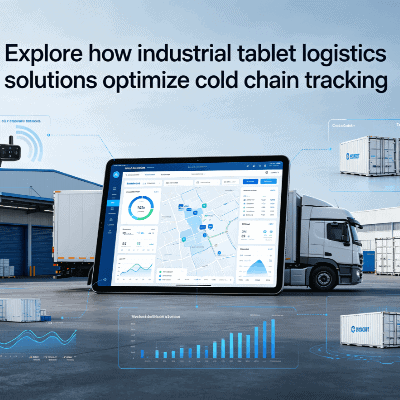
The modern supply chain relies on the seamless flow of data as much as the physical movement of goods. In high-velocity logistics environments, consumer-grade mobile devices often fail due to extreme temperatures, mechanical shocks, and poor connectivity. Industrial tablets have become the definitive solution for bridging the gap between a central Warehouse Management System (WMS) and the operational floor.
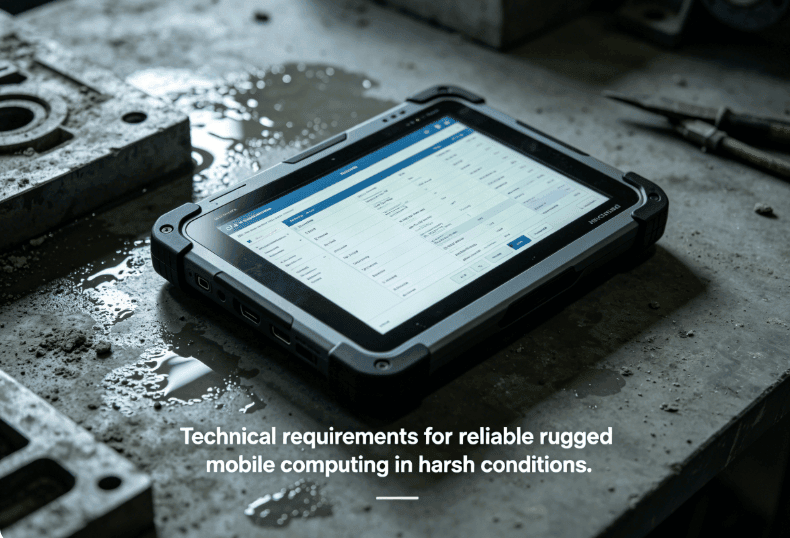
Unlike standard hardware, an industrial tablet is engineered to withstand the specific rigors of the logistics industry. From the vibration of a forklift to the moisture of a cold-storage facility, these devices provide the continuous uptime required for 24/7 global operations. This guide examines the critical applications where rugged computing transforms logistical efficiency.
Real-Time Warehouse Management (WMS) and Inventory Control
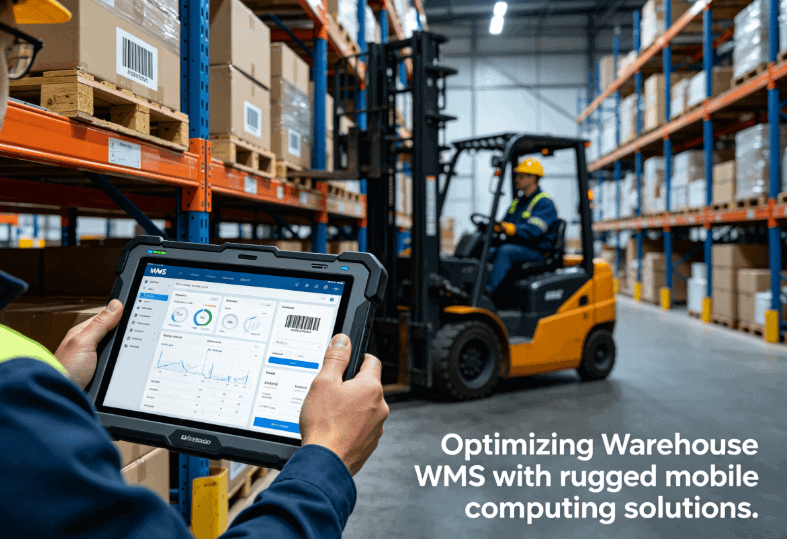
The most significant application of industrial tablets is the digitization of the warehouse floor. By integrating directly with a WMS, these devices allow for instantaneous data synchronization, replacing slow and error-prone paper-based systems.
- Directed Picking and Put-away: Workers receive real-time instructions on their tablets, showing the most efficient route through the warehouse to locate a specific SKU.
- Dynamic Inventory Auditing: Using integrated 1D/2D barcode scanners, personnel can perform cycle counts without returning to a central workstation.
- Inbound Receiving: When goods arrive at the loading dock, industrial tablets allow staff to scan packing slips and verify shipments immediately, flagging discrepancies in real-time.
Logistics providers use high-performance industrial tablet PCs.Therefore, they can achieve more accurate data capture in low-light or high-density racking environments.
Forklift Integration and Vehicle-Mount Operations
Logistics is a mobile industry, and much of that mobility involves material handling equipment (MHE). Forklifts, reach trucks, and pallet jacks often use vehicle-mounted industrial tablets installed on the vehicle. This gives drivers constant access to operational data.
Vehicle-mount applications present unique engineering challenges. The tablet must handle constant mechanical vibration and potential power surges from the vehicle’s electrical system. Professionals typically look for devices with MIL-STD-810G or 810H certifications, which verify that the hardware can survive the harmonic vibrations typical of warehouse machinery. Furthermore, these tablets often feature specialized docking stations that provide external antenna pass-throughs for superior Wi-Fi and GPS reception within steel-framed facilities.
Cold Chain Management and Extreme Environments
Temperature-sensitive logistics, such as pharmaceutical and food transport, require hardware that can operate in sub-zero environments. Standard tablets often experience screen fogging (condensation) or battery failure when moving between a -30°C freezer and a +20°C loading dock.
Industrial tablets for cold chain logistics feature internal heaters and specialized “glove-mode” touchscreens. These technical specifications allow operators to maintain productivity without removing protective gear or waiting for the device to “thaw.” This capability is essential for maintaining the digital “chain of custody” for temperature-sensitive cargo, ensuring regulatory compliance.
Last-Mile Delivery and Proof of Delivery (PoD)
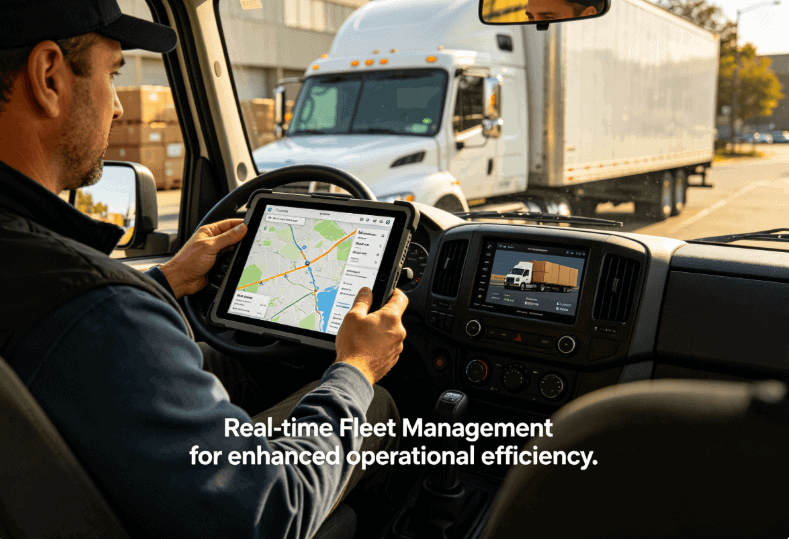
In the final stage of the supply chain, industrial tablets serve as the primary interface between the carrier and the customer. These devices must be rugged enough for outdoor use while remaining light enough for a driver to carry throughout a 10-hour shift.
- Signature and Photo Capture: High-resolution capacitive screens allow for precise electronic signatures, while integrated cameras document the condition of delivered parcels.
- Geographic Information Systems (GIS): Advanced GNSS (GPS/GLONASS) modules provide drivers with precise routing, reducing fuel consumption and improving delivery windows.
- Connectivity on the Move: With integrated 4G/5G LTE modules, drivers stay connected to the dispatch center regardless of local Wi-Fi availability.
Port and Intermodal Terminal Management
At ports and large-scale intermodal terminals, the scale of operations is massive, and the environment is exceptionally harsh due to salt spray, high winds, and heavy rain. Industrial tablets are used here to manage container stacking and vessel loading.
Terminal operators use these devices to track the precise GPS location of containers across miles of asphalt. The sunlight-readable displays (often exceeding 800-1000 nits) are a critical requirement here, as operators must be able to read complex yard maps in direct midday sun. The failure of a single device in this environment can stall a multi-million dollar loading operation, making the reliability of industrial-grade hardware a non-negotiable requirement.
Technical Specification Comparison: Industrial vs. Consumer Tablets
| Feature | Consumer Tablet | Industrial Tablet for Logistics |
| Ingress Protection | IP52 (Limited) | IP65 to IP67 (Dust-tight/Waterproof) |
| Shock/Vibration | None | MIL-STD-810G/H Certified |
| Barcode Scanning | Camera-based (Slow) | Dedicated 1D/2D Hardware Engine |
| Battery Life | Fixed Battery | Hot-swappable (Continuous Use) |
| Operating Temp | 0°C to 35°C | -20°C to 60°C (Extends for Cold Chain) |
FAQ
What does an IP65 rating mean for an industrial tablet in a warehouse?
An IP65 rating indicates the tablet is completely dust-tight (the “6”) and protected against water jets from any angle (the “5”). In a warehouse, this means the device is protected from the fine dust typical of cardboard handling and can be safely wiped down or exposed to rain on a loading dock.
Can industrial tablets work with thick work gloves?
Yes. Most industrial tablets use specialized touch controllers that can be set to “Glove Mode.” This increases the sensitivity of the capacitive screen, allowing it to detect touch even through heavy industrial or thermal gloves used in cold storage.
Why is a dedicated barcode scanner better than a tablet’s camera?
Dedicated scan engines use laser or advanced LED imaging to decode barcodes in milliseconds. They can read damaged, poorly printed, or shrink-wrapped labels that a standard camera would struggle to focus on, significantly increasing picking speed.
What is a “hot-swappable” battery?
In 24/7 logistics operations, a tablet cannot be taken out of service to charge. Hot-swapping allows an operator to remove a low battery and insert a fully charged one without shutting down the device or losing data, ensuring zero downtime between shifts.
Reference Sources
- IEEE Xplore: Optimizing Warehouse Operations with Mobile Computing and IoT
- MIL-STD-810H: Department of Defense Test Method Standard for Environmental Engineering
- ISO 9001:2015: Quality Management Systems in Electronics Manufacturing
- Inbound Logistics: The Role of Rugged Hardware in Supply Chain Resilience